Stop Paying for Software Features You Don't Use: The Standalone Tax
Every unused module in your stack is a standalone tax — a fee you pay because the vendor bundles features together. Here is how to reduce software bills without losing the tools you rely on.
The standalone tax explained
Vendors bundle features so they can charge one headline price. You might only need e-signatures, but the plan includes CRM, analytics, and automation you never touch. That unused portion is what we call the standalone tax — you pay for it because it is not sold separately.
The tax shows up twice: once on your invoice, and again in attention cost. Teams click past tabs they do not understand, open the wrong module, or rebuild workflows in spreadsheets because the "proper" tool feels too heavy.
Why "we might need it someday" is expensive
Someday rarely arrives before the renewal date. Meanwhile, list prices drift up 5–15% a year and per-seat charges multiply as you hire part-time help.
If a feature has not been used in 90 days, it is not a safety net — it is budget leakage. Downgrade, archive, or replace it before auto-renew locks you in for another year.
How to reduce software bills in three passes
Pass one — inventory: list every subscription, seat count, and renewal date. Pass two — usage: ask each person which three screens they open daily. Pass three — overlap: mark tools that solve the same problem (two e-sign vendors, two invoice senders, etc.).
Cancel overlap first. Then downgrade tiers where only one feature justified the upgrade. Negotiate last — vendors expect churn audits in Q4 and will often offer a lower tier if you threaten to leave.
Fair pricing when you use one feature — amazing when you use all
The fairest stacks charge a baseline that feels reasonable if you only touch one module, then compound value when you turn on more. That is the opposite of enterprise shelf-ware, where you prepay for everything upfront.
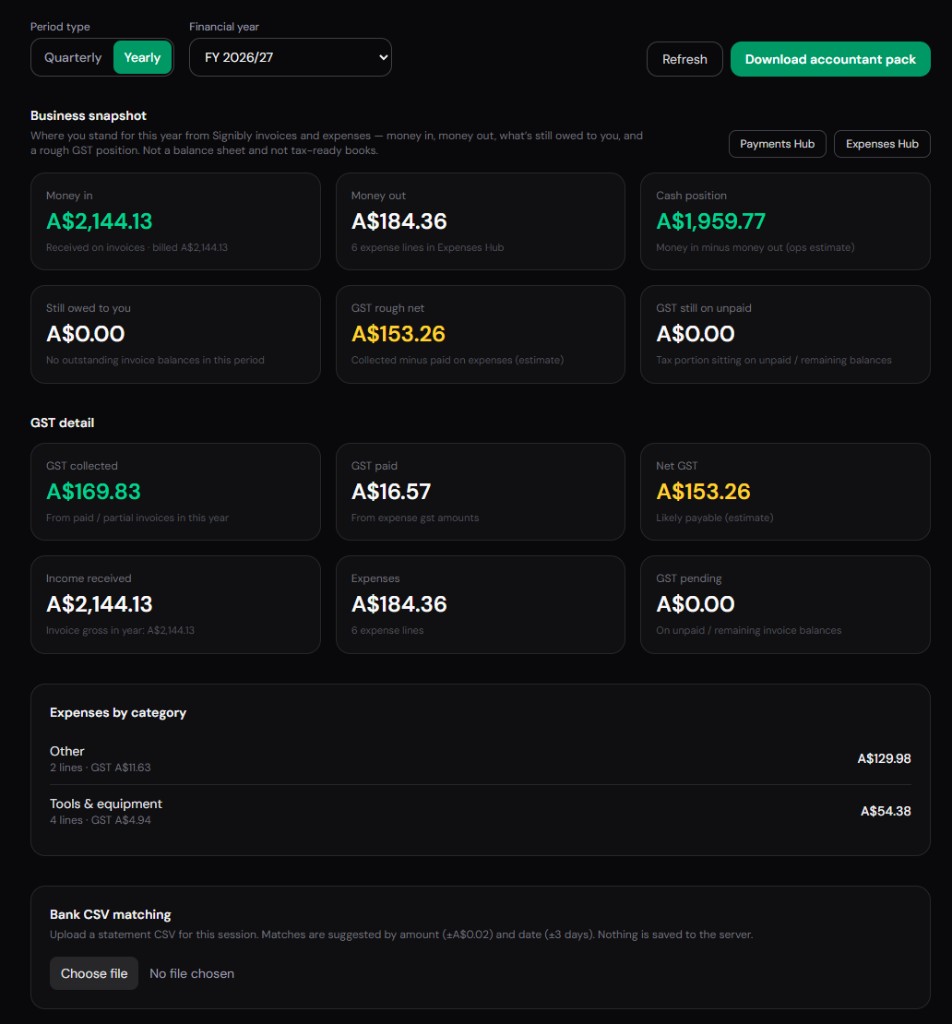
Signibly Business is designed for that pattern: strong value if you only send envelopes, and much more if you also run Invoice Hub, Payments Hub, Expenses Hub, and tax exports — without buying four separate products.
Set a renewal calendar
Put every SaaS renewal in a shared calendar 30 days before charge date. Each event gets a one-question review: did we use the paid features last month? If no, downgrade or migrate.
Owners who run this quarterly review commonly cut 20–40% from their software line without changing how they serve customers.
Should I cancel tools before replacing them?
Migrate first, then cancel. Run one billing cycle in parallel if the workflow is client-facing. Signibly Free lets you validate signing and light invoicing before you switch off a legacy e-sign seat.
What if my team needs different modules?
Pick a platform where optional hubs stay available but not in the way — or hide tiles you do not need. Pay for breadth only when a second module is actually in use.
Related
All-in-one SMB software · Hide unused features · Pricing · Shelf-ware waste · Top 10 SMB software · FreshBooks vs Signibly · Track partial payments · DocuSign vs PandaDoc · AI document creation · PandaDoc vs SignNow · PandaDoc pricing 2026 · PandaDoc vs Adobe Sign · SignWell vs DocuSign · Signaturely vs DocuSign · Dropbox Sign & invoicing · eSignLive vs DocuSign · AI vs template contracts · AI fillable PDF guide · Complete document workflow · PandaDoc vs DocuSign vs Signibly · Hidden cost of five business apps · Best AI contract generators · 50 business documents checklist · AI vs lawyers for contracts · Client onboarding guide · Build a paperless business · Switch to Signibly AI · Scan receipts & invoices · Freelancers · Small businesses · Get paid faster · Replace multiple apps · Client management · Cheaper DocuSign alternative · Custom dashboards · All blog posts · All solutions · Compare vendors